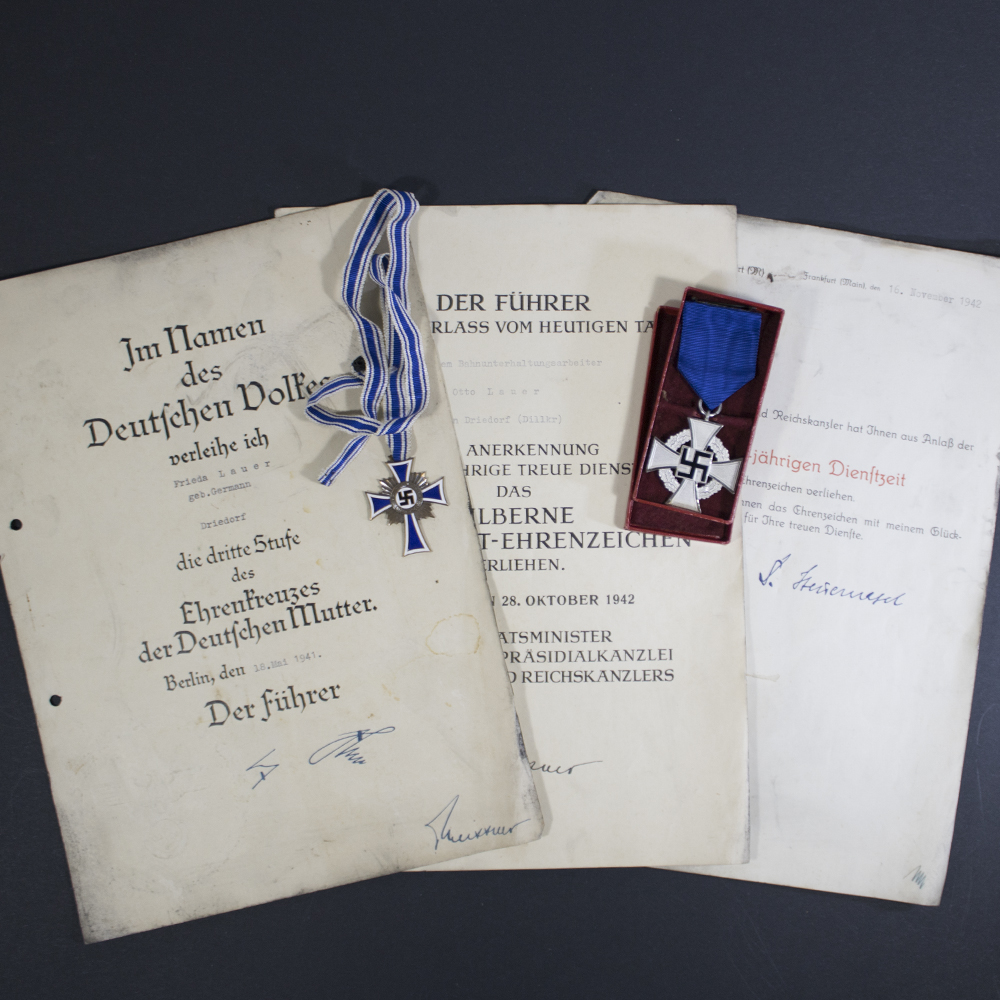
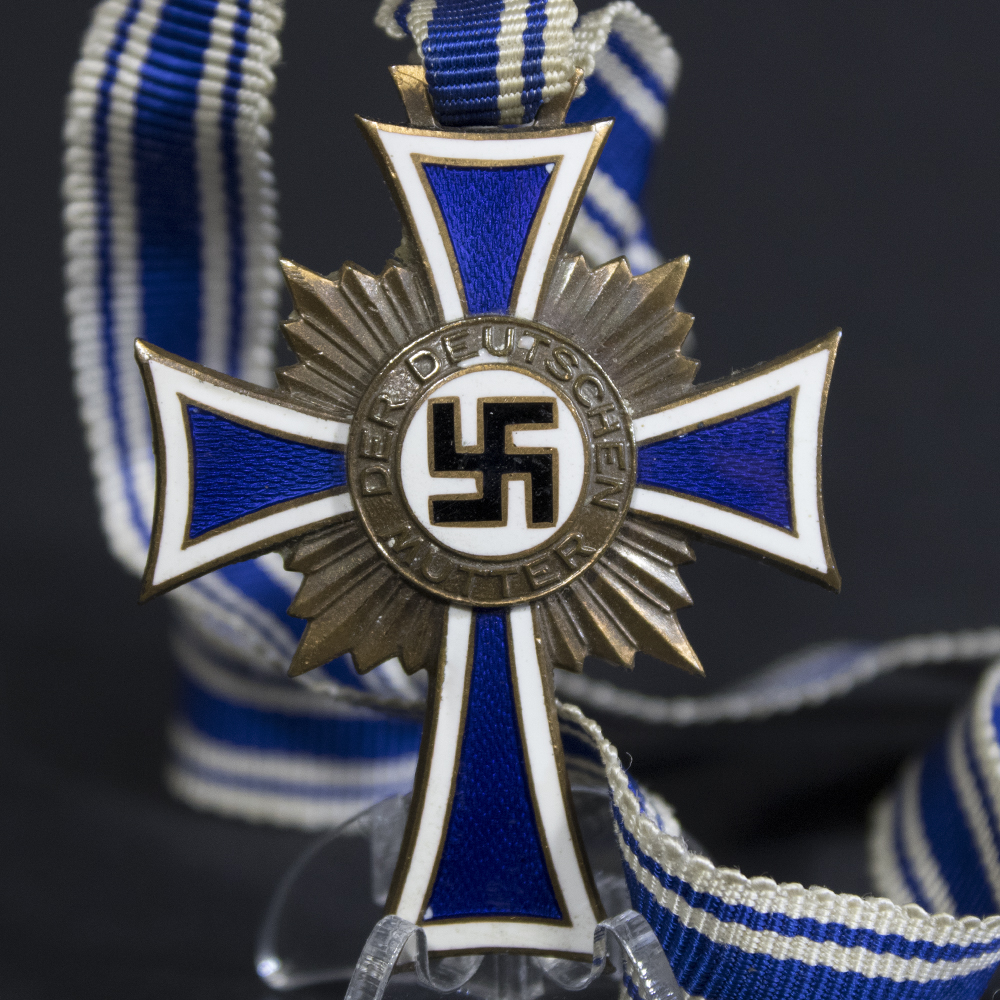
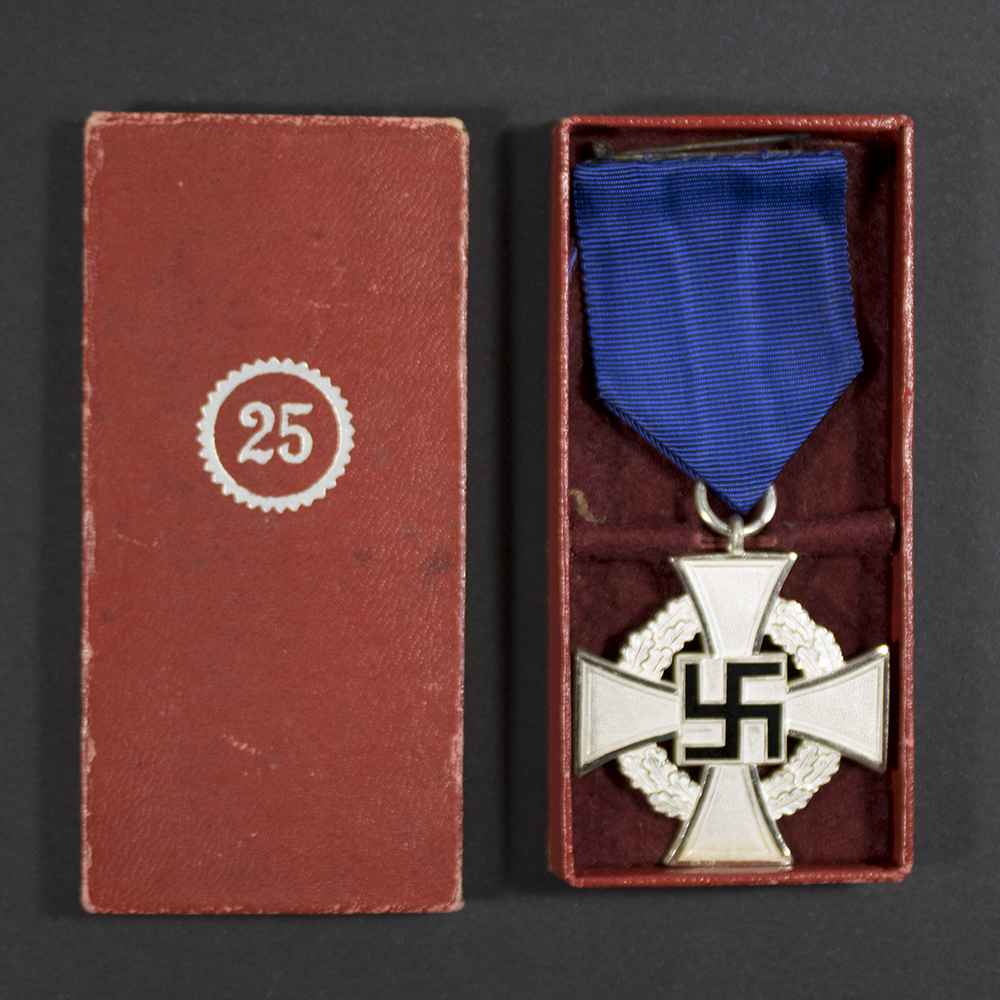
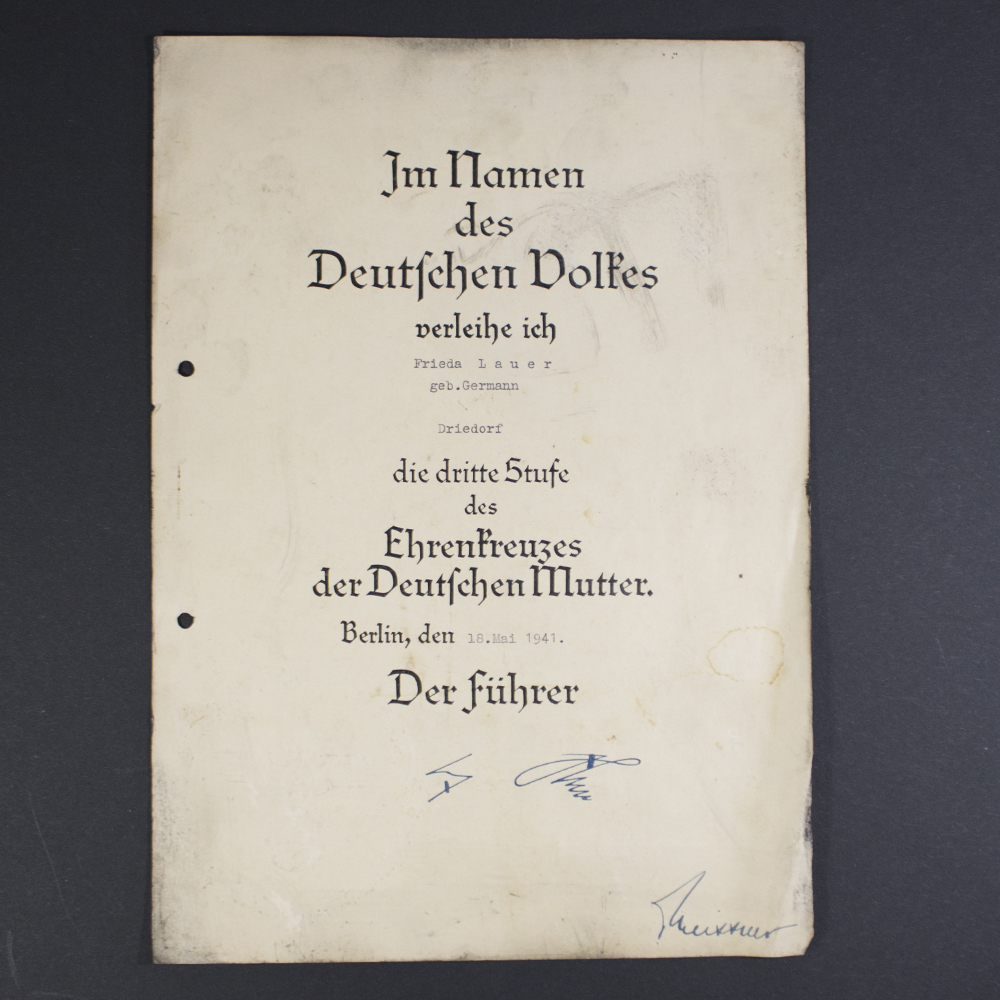
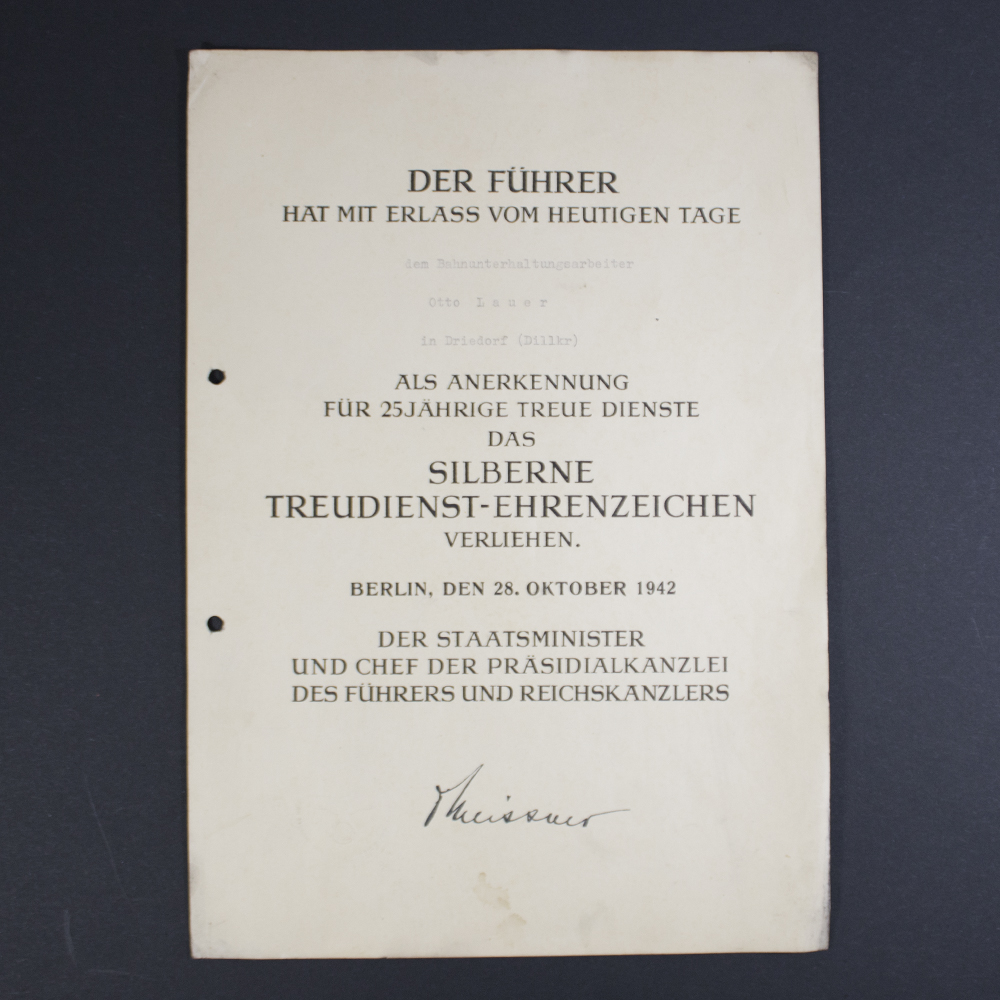
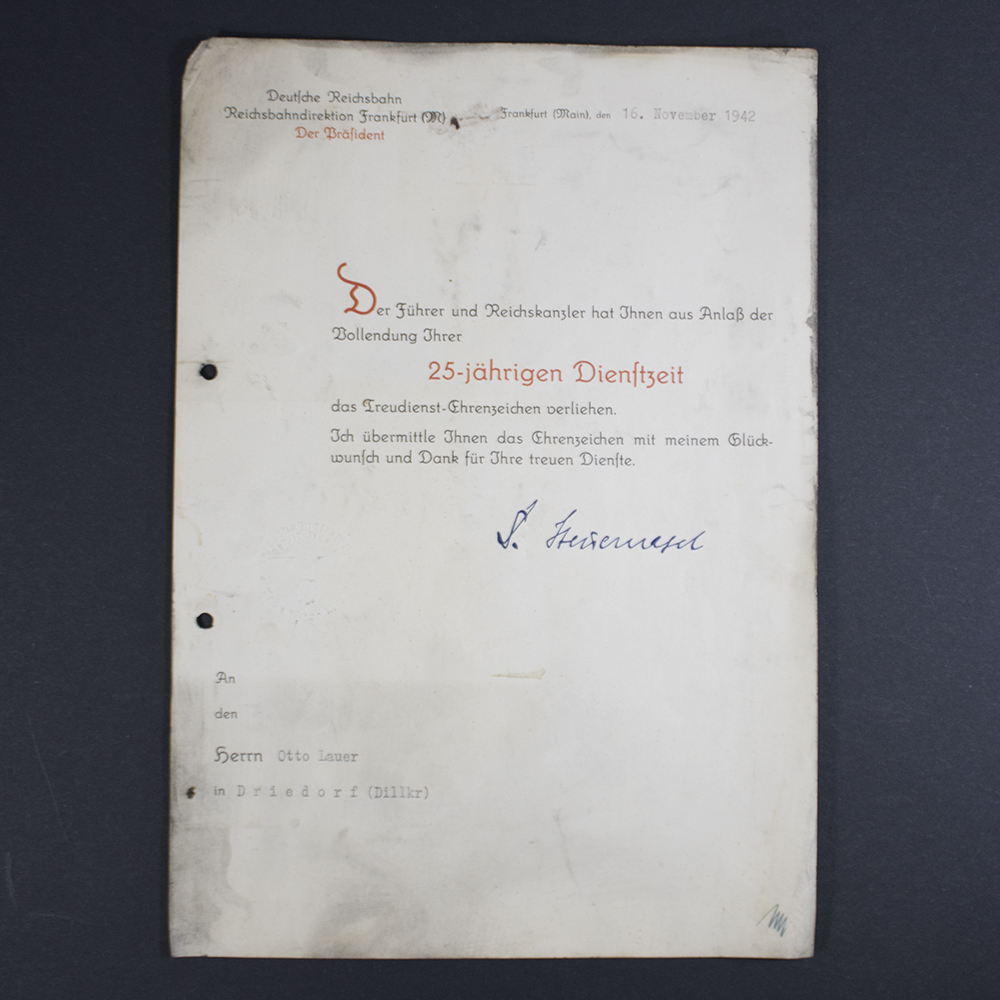
This Faithful Service and Mothers Cross Grouping highlights an extraordinary dual-award family archive from the Second World War. State officials awarded decorations to different household members to recognize both civil service and maternal contributions during the wartime era.
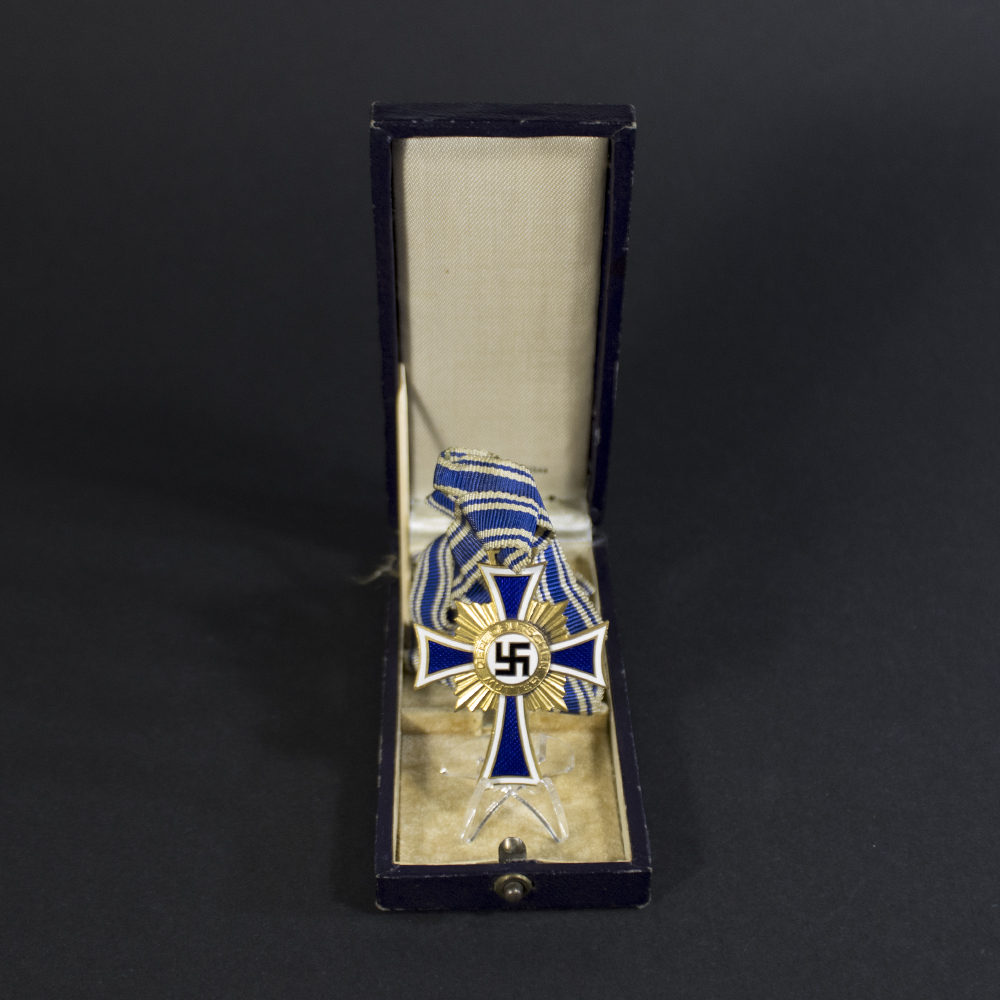
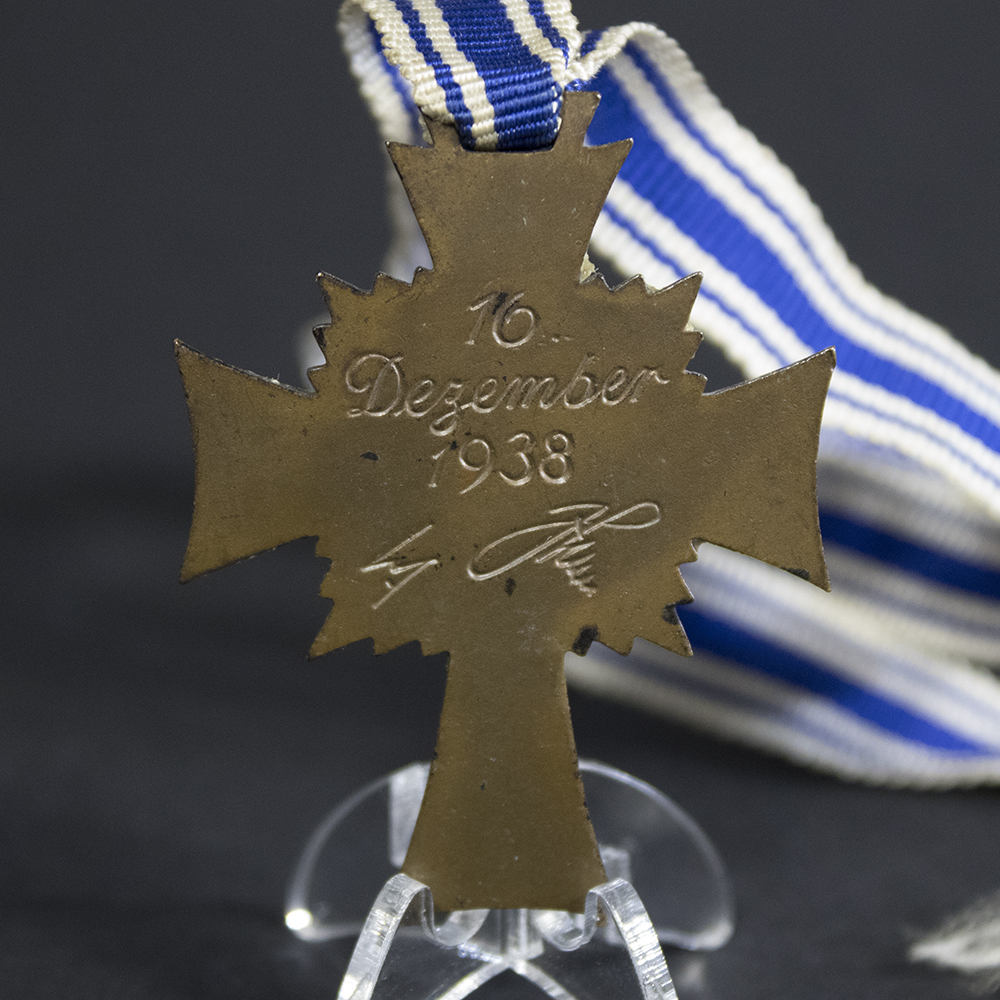
The first component belonged to Frieda Lauer of Driedorf. She received the Bronze Mother’s Cross for raising four or five children. The set includes a bronze cross, suspension ribbon, and formal award diploma signed in May 1941.
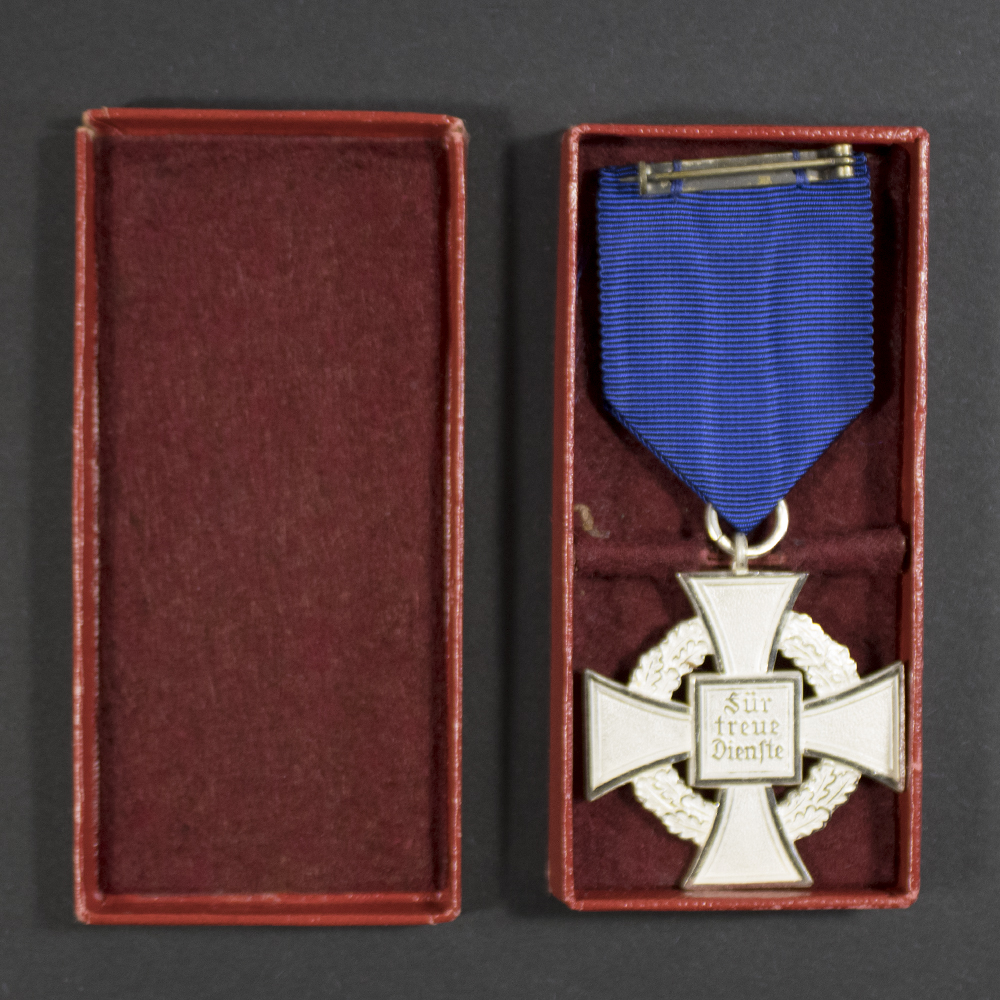
The second component belonged to Otto Lauer, a railway maintenance worker (Bahnunterhaltungsarbeiter) in Driedorf. He received the Silver Faithful Service Cross for completing 25 years of loyal service. This rare set includes a silver cross in its original red presentation box stamped with a 25 on the lid.
Official documentation accompanies both awards. Otto Lauer’s paperwork includes the formal presidential decree signed on October 28, 1942, and an official transmittal letter from the Reichsbahndirektion Frankfurt (Main) dated November 16, 1942.
Historical Significance of the Mother’s Cross
Adolf Hitler instituted the Cross of Honour of the German Mother (Ehrenkreuz der Deutschen Mutter) on December 16, 1938. The regime created this state decoration as part of a broader strategy to reshape German society around strict demographic and ideological goals.
-
Ideological Foundations: The award served as a key propaganda tool promoting the regime’s ideal of the woman as a mother and homemaker. Specifically, policies restricted women’s societal roles primarily to domestic duties under the traditional slogan “Kinder, Küche, Kirche” (Children, Kitchen, Church).
-
Demographic Policies: The regime aimed to reverse declining birthrates to build a large population for future expansion. Consequently, leadership viewed a growing population as vital for securing Lebensraum (living space) in Eastern Europe.